
Guide
Toileting
Most children with additional needs can achieve continence. It often takes longer, and it almost always takes consistency.
Free home-visiting Portage across Wiltshire
Guide
Most children with additional needs can achieve continence. It often takes longer, and it almost always takes consistency.
Readiness is not age. Do not start because of a birthday or a nursery place, and do not avoid starting because of a diagnosis.
Method
Choose a fortnight with as little else going on as possible, agree the plan with everyone involved, and stick to it.
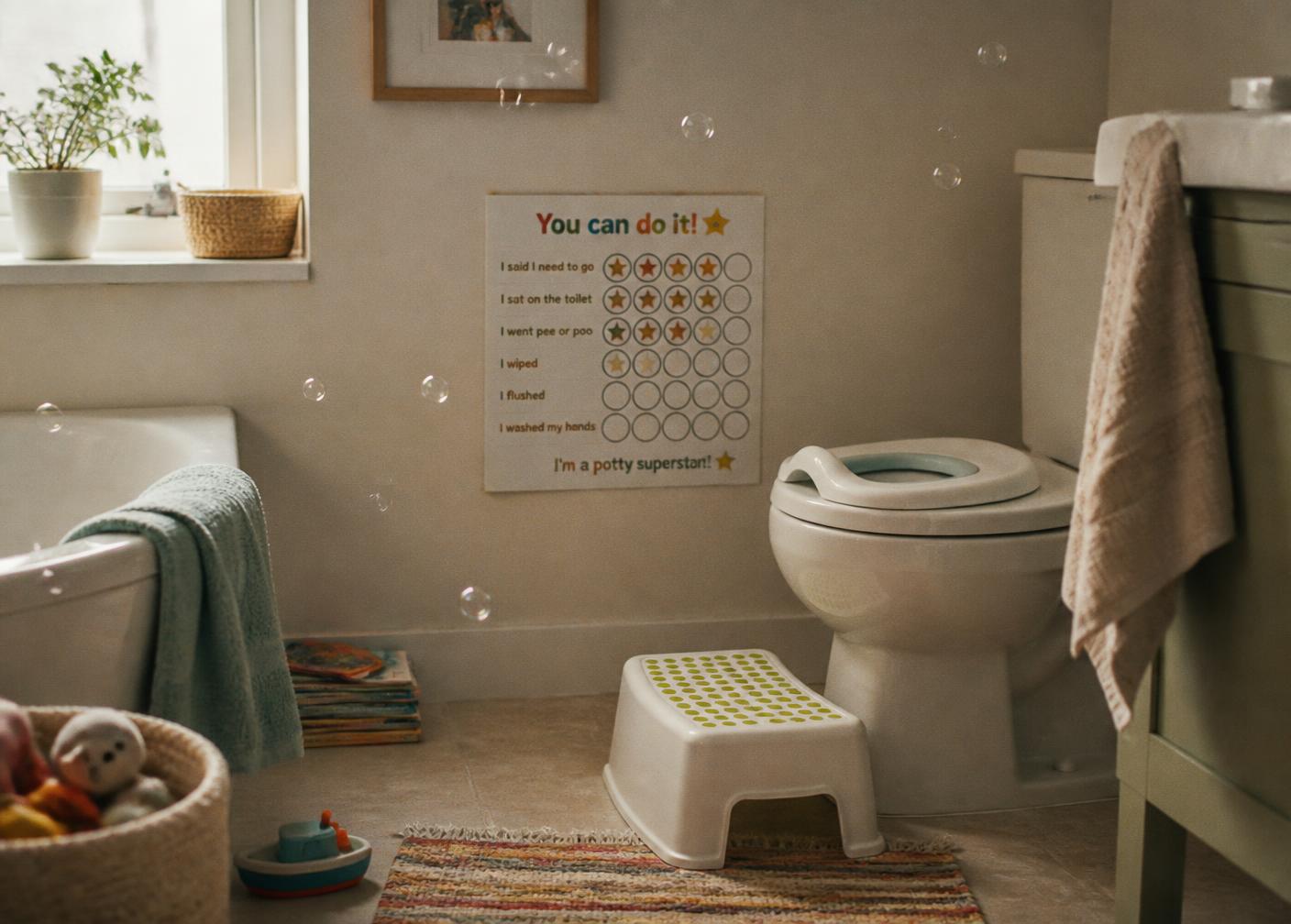
Step, seat insert, easy clothing, and everything you need within reach of the toilet.
Sitting on the toilet fully clothed, flushing, washing hands — all before you expect anything else.
Photographs of each step in order, on the bathroom wall.
Every 60 to 90 minutes, plus after meals. Timing beats asking.
Reward cooperation. The result follows cooperation, not the other way round.
Change calmly, say little, carry on. Accidents are data, not failure.
A simple chart of wet, dry and successful times reveals the pattern within a week.
Regression after illness, a house move, a new sibling or a change of setting is normal. Return to the previous stage for a while rather than abandoning the plan.
Constipation is the single most common reason toilet training stalls, and it is often invisible. If your child is withholding, straining, soiling, or has hard or infrequent stools, speak to your GP or health visitor — it is treatable, and progress is very hard until it is treated.
Your Portage Home Visitor can help you build a toileting plan around your child's particular needs, including for children with physical disabilities or significant sensory needs.
Routines, food and eating, and play ideas.