
Guide
Food and eating
Almost every family we meet has worried about food. Very few of them needed to worry as much as they did.
Free home-visiting Portage across Wiltshire
Guide
Almost every family we meet has worried about food. Very few of them needed to worry as much as they did.
When a child refuses food it is rarely stubbornness. It is usually information. Understanding which kind of difficulty you are looking at changes what you do about it.
Taste, smell, texture, temperature and appearance can all be overwhelming. A child may accept a food dry and refuse it wet, or eat only within a narrow colour range. Mixed textures are often the hardest.
Chewing, sucking, swallowing and sitting stably all require muscle control. Reflux, constipation, dental pain, tiredness and medication side effects change appetite. Physical causes should always be checked with your GP, health visitor or paediatrician.
Anxiety, past choking or vomiting, control, and the tension that builds around mealtimes all affect eating. Children read adult stress at the table very accurately.
Noise, seating, lighting, timing, who else is present and how long the meal lasts all matter. Sometimes changing the room changes the meal.
Practical
Small, unhurried changes, repeated. Progress with eating is measured in months, not meals.
Offer, do not insist. A child who is not being pushed is more likely to explore.
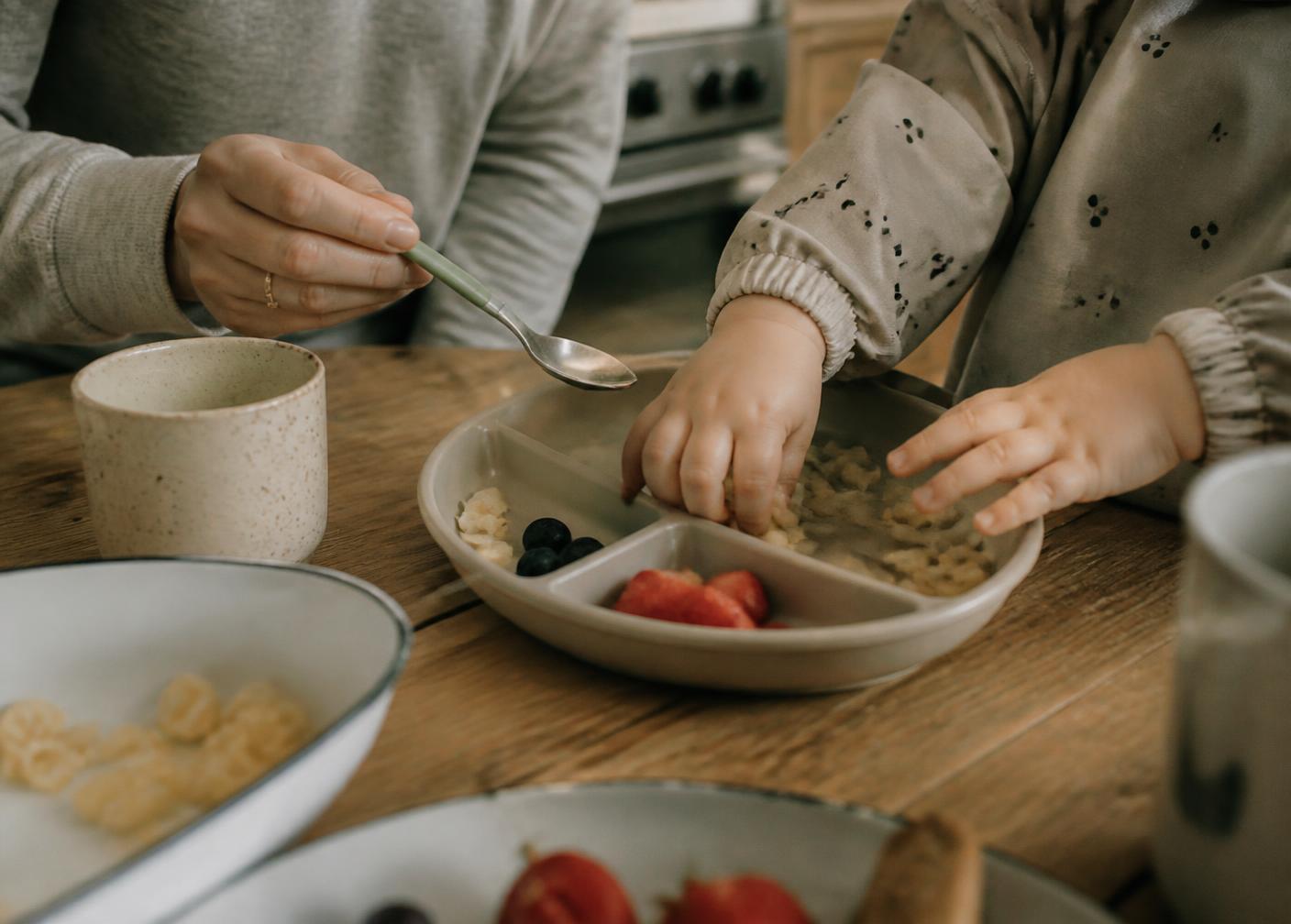
Touching, squashing and smearing are legitimate stages on the way to eating. Exploration comes before tasting.
A single pea on a plate is an invitation. A full plate can be a wall.
Familiar food makes new food feel safer.
Children learn eating by watching. Sit down, eat the same thing where you can, and talk about something else.
Fifteen to twenty minutes. Ending calmly matters more than finishing.
Predictability helps here as much as anywhere else.
A simple list shows progress you would otherwise miss, and is useful evidence for dietitians and paediatricians.
Speak to your GP, health visitor or paediatrician if your child is losing weight or not gaining, is regularly gagging, choking or vomiting, is eating fewer than around ten foods in total, is distressed by mealtimes, or if you are worried. Ask about a referral to a paediatric dietitian or a speech and language therapist who specialises in eating and drinking.
You can also raise it at your Portage visit and we can help you prepare for that conversation.
Routines, toileting and play ideas.